
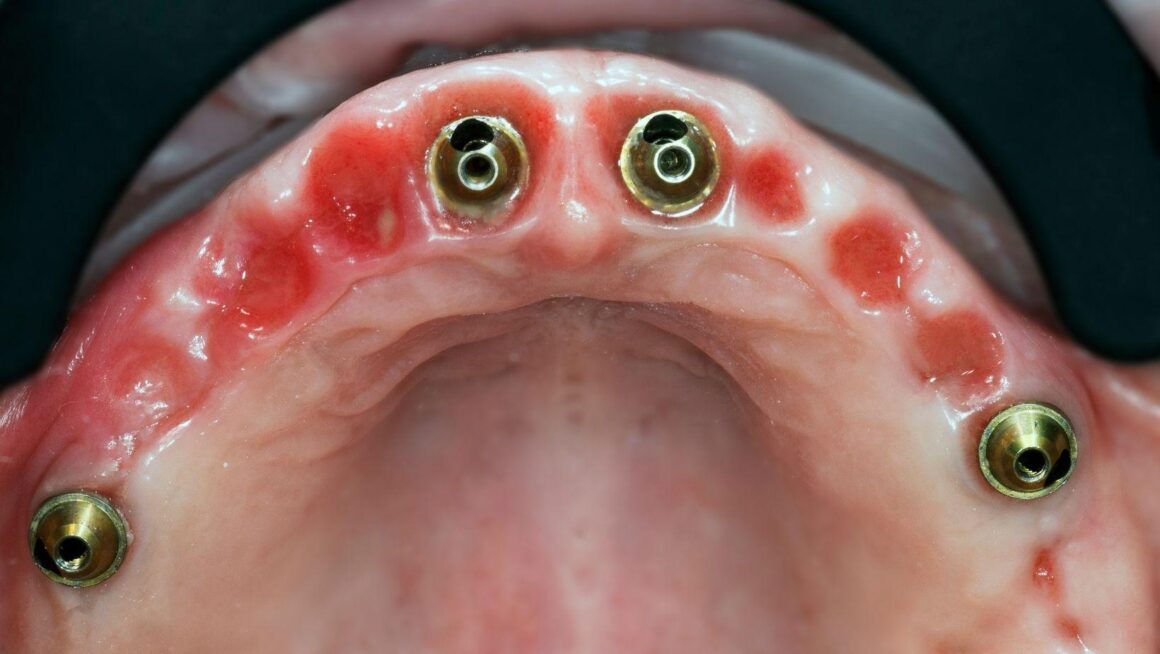
Full-arch implant restorations can provide reliable function for many years. Their lifespan depends on more than the implants themselves. Patients with full arch dental implants in Minot, ND should keep these long-term factors in mind well after their initial recovery is complete.
Your oral hygiene, bite forces, smoking habits, medical health, and the materials used for the prosthesis all affect long-term performance. Changes in fit, comfort, chewing, speech, or gum tissue can signal that your prosthesis needs professional evaluation.
Relining can improve the fit when your gum and bone contours change. However, it cannot correct every problem.
You will learn how to recognize these changes and understand when repairs or relines may help. Planning for replacement before minor issues affect comfort or function is important.
Expected Service Life And Performance Factors
Your full-arch implant restoration may function for many years. Its lifespan depends on the prosthesis, supporting implants, oral tissues, and maintenance.
The implant fixtures often remain stable longer than the visible teeth. These teeth may need repair, replacement, or relining as materials wear or your oral tissues change.
Typical Longevity Ranges
Implant fixtures can remain functional for decades when they integrate properly and you control inflammation. The fixed prosthesis typically has a shorter service life.
Depending on its material, design, bite forces, and maintenance, you may need major repair or replacement after approximately 10 to 15 years. Some restorations last longer.
A reline applies mainly to removable implant-supported dentures, not most fixed full-arch bridges. You may need a reline when gum and bone changes create a gap between the denture base and your tissues.
Common signs include rocking, reduced chewing stability, sore spots, food collecting beneath the prosthesis, or loosened attachments. Your dentist should assess the fit rather than relying on symptoms alone.
Bone resorption, tissue remodeling, worn attachments, and changes in your bite can alter stability even when you feel comfortable.
Materials And Prosthesis Design
Acrylic teeth on a titanium or metal framework can be repaired relatively easily. The acrylic may chip, wear, or fracture.
Monolithic zirconia resists tooth wear and staining better. However, fractures or framework-related problems can require more complex treatment.
Your dentist must also verify that the design allows cleaning around each implant. Prosthesis design affects both durability and maintenance:
A relining procedure may not correct every problem. If the denture teeth have worn down, the bite has changed, the base has fractured, or the attachments no longer function properly, you may need repair, replacement of components, or a new prosthesis instead.
Patient Health And Daily Habits
Your daily plaque control strongly influences long-term performance. Clean beneath the prosthesis with tools recommended by your dental team, such as an interdental brush, implant-specific floss, or an oral irrigator.
Attend professional maintenance visits so your clinician can check bleeding, pocket depths, screw stability, attachment wear, and prosthesis fit. Smoking increases the risk of impaired healing and peri-implant disease.
Poorly controlled diabetes, a history of periodontal disease, dry mouth, and medications that affect bone metabolism can also increase complications. You should tell your dentist about these conditions and keep relevant medical treatment controlled.
Night-time clenching or grinding places high loads on the restoration. If you grind your teeth, a professionally designed night guard may protect the prosthetic teeth and reduce mechanical complications.
Do not adjust, glue, or reline the prosthesis yourself.
Recognizing Changes In Fit And Function
Your restoration can change as the supporting tissues, implants, abutments, and prosthetic materials respond to daily use. Early recognition of movement, altered contacts, hygiene difficulty, or discomfort helps your clinician determine whether you need adjustment, repair, relining, or more extensive treatment.
Signs Of Tissue Settling
After implant placement or restoration delivery, swelling and soft-tissue remodeling can alter how a removable or tissue-supported component contacts the mucosa. You may notice a new pressure spot, looseness, rocking, food trapping, or a change in how the prosthesis seats.
These changes do not necessarily indicate implant failure, but they require examination. Watch for persistent redness, soreness, bleeding, swelling, or an area that stays ulcerated.
Difficulty cleaning beneath the prosthesis can also signal that tissue contours or the prosthetic surface have changed. Do not attempt to improve the fit with over-the-counter materials; they can mask the cause and interfere with professional evaluation.
Effects On Bite Stability And Comfort
A change in fit can shift your bite and concentrate force on specific implants, screws, framework areas, or opposing teeth. Symptoms may include a different first contact when you close, chewing on one side, jaw fatigue, clicking, tenderness, or a feeling that the restoration moves during meals.
Report a loose screw, fractured acrylic or ceramic, altered speech, or sudden mobility promptly. Your clinician may check occlusion with marking material, evaluate the implant and abutment interfaces, and inspect the prosthesis for wear or fracture.
Pain, swelling, drainage, or increasing implant mobility requires timely assessment, rather than an adjustment based only on comfort.
Clinical Monitoring Appointments
At maintenance visits, your clinician should review comfort, chewing, speech, hygiene access, and any changes since the previous appointment. The examination may include removal of a screw-retained restoration when appropriate, inspection of the tissue, probing around implants, assessment of occlusion, and evaluation of screws, abutments, framework, acrylic, and teeth.
Your recall interval depends on hygiene, medical conditions, smoking, tissue health, prosthesis design, and prior complications. A relining procedure may help a removable tissue-supported component regain intimate contact after tissue changes, but a fixed implant-supported restoration generally requires correction of its fit, components, or supporting tissues rather than a conventional denture reline.
Regular records, photographs, and radiographs when clinically indicated help identify gradual changes.
Relines, Repairs, And Replacement Planning
A reline can restore tissue contact when your removable full-arch prosthesis loses fit, while repairs address localized damage without replacing the entire appliance. You need a remake or replacement when wear, fracture, poor implant positioning, or material degradation prevents predictable function and maintenance.
When A Reline Is Appropriate
You may need a reline when the tissue surface no longer adapts closely to your gums, causing rocking, soreness, food trapping, or reduced chewing stability. Bone and soft-tissue remodeling, changes in the ridge, and repeated adjustments can alter the fit over time.
A reline is appropriate only when the prosthesis remains structurally sound and the teeth, framework, attachment housings, and implant interfaces remain serviceable. Your dentist must first check for inflammation, damaged implants, loose screws, worn attachments, and inadequate hygiene access.
Relining an unstable or fractured prosthesis can conceal the underlying problem and provide only temporary improvement. For an implant-retained overdenture, your clinician may replace worn attachment inserts during the same visit.
A reline does not correct implant mobility or peri-implant disease, and it does not compensate for an incorrect implant position. Your dentist may use a chairside or laboratory reline depending on the required accuracy and the condition of the prosthesis.
Differences Between Relines And Remakes
A reline adds or replaces material on the tissue-contacting surface to improve adaptation. It preserves most of the existing prosthesis, so it generally requires less time and cost than a remake.
It cannot reliably correct fractured frameworks, severely worn teeth, distorted bases, poor esthetics, or inadequate space for cleaning. A repair restores a localized defect, such as a fractured denture base, detached tooth, or damaged attachment housing.
Your dentist must identify why the failure occurred before repairing it. Repeated fractures may indicate excessive occlusal force, insufficient material thickness, an unstable base, or a framework problem.
A remake replaces the prosthesis when its design, fit, strength, or appearance no longer supports predictable use. Fixed full-arch restorations may require component replacement, a new framework, or complete fabrication when cracks, zirconia fractures, misfit, or inaccessible implant connections compromise maintenance.
Your treatment plan should account for implant angulation, abutment selection, hygiene access, and future service needs.
Maintenance Practices That Protect The Restoration
You can extend service life by following a professional maintenance schedule based on your implant health, prosthesis type, and risk factors. At each review, your dental team should examine soft tissues and probe around implants when appropriate.
They should also check screw or attachment stability. Assess occlusion and inspect the restoration for wear, cracks, and loss of fit.
Clean daily beneath fixed full-arch restorations with tools your clinician recommends, such as a water flosser, super floss, interdental brushes, or specialized threaders. Remove implant-retained overdentures as directed so you can clean the tissue surface, attachments, and prosthesis separately.
Avoid using household adhesives, abrasive cleaners, or unapproved repair materials. Report persistent bleeding, swelling, pain, a loose component, new movement, altered speech, or difficulty chewing promptly.